Shani Turned Her Post-Trauma into a Groundbreaking Musical
Shani Mezer, who lives with post-trauma and an eating disorder, has transformed her pain into an ambitious creative project - a full-scale musical built entirely in virtual reality. “Art is my way of processing it,” she says.


Shani Mezer, a graduate of Tel Aviv University’s Film, Television, and Digital Media program, has created one of the most ambitious and emotionally charged projects ever made in Israel - Divine Chaos, a musical experienced entirely in Virtual Reality (VR).
This groundbreaking creation merges theatre, cinema, music, and advanced technology - but beyond its innovation, it dives deep into complex and painful subjects: post-trauma, abusive relationships, and Stockholm Syndrome, all interwoven with moments of irony and dark humor.
“I wanted to create something you can’t look away from,” Mezer tells Shavvim. “In VR, you’re inside the space. You witness love, violence, and pain - you can’t just walk away, just like a child in a home where things happen that shouldn’t.”
Mezer reveals that she herself is a survivor of sexual assault, and that her eating disorder and PTSD grew out of those years.
“Art is how I process it - through writing, singing, and directing. It gives me legitimacy to acknowledge that what happened wasn’t okay, and that the way I cope is okay.”
The musical offers a feminist and critical interpretation of the story of Eden - told through the eyes of Lilith, Adam’s first wife, the woman who fled paradise after refusing to be subservient to a man.
Mezer explores what makes one woman run and another stay - without judgment.
“I was always fascinated by why Lilith left and why Eve stayed,” she says. “When I began to understand the psychology of abusive relationships, I realized both choices come from the same pain - just expressed differently.”
Through songs and monologues, a world unfolds where control, guilt, and love are inextricably bound together.
“It’s a cycle of violence that keeps repeating - from God to Adam, from Adam to Eve, and from them to their children,” Mezer explains. “In Stockholm Syndrome, the victim develops empathy for their abuser. That’s what happens to Eve - she sees Adam’s wounds and wants to heal him, even as he hurts her.”
At the heart of Divine Chaos lies a moral question: can we stop judging those who stay in abusive relationships?
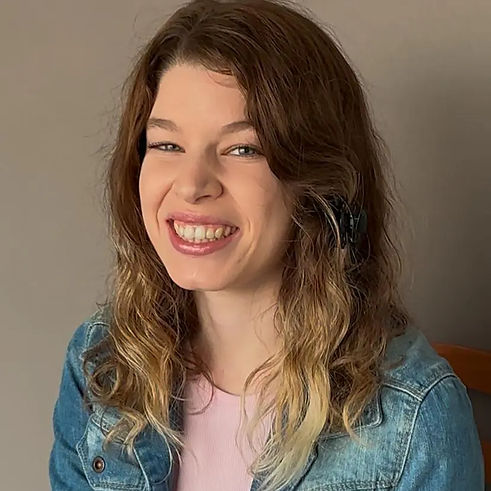
“People often say, ‘why doesn’t she just leave?’ But it’s not that simple. Sometimes you love. You understand. You pity. Sometimes you’re just trying to survive. I want people to see that you can’t judge someone for staying. She’s not there because she’s weak or foolish - she’s there because she’s human, with a heart, fears, and hope. The best way to help her isn’t to tell her what to do - it’s to stand beside her.”
One striking aspect of the musical is that God appears as a woman - a divine, feminine presence Mezer calls “Elohima.”
“We’re used to referring to God in masculine terms, even though divinity is beyond gender,” she says. “Here, God chooses to appear as a woman - to challenge the assumption that divinity must be male.”
The project’s original music is composed by Alon Kaplan, a renowned musician and sound designer for video games in Israel and abroad, and a lecturer at Rimon School of Music.
“The songs shift between dramatic, dark, and deeply emotional moments to almost over-the-top Broadway-style musical scenes,” Kaplan says. “It swings between pain and laughter, confession and revelation — and that’s what makes it so compelling.”